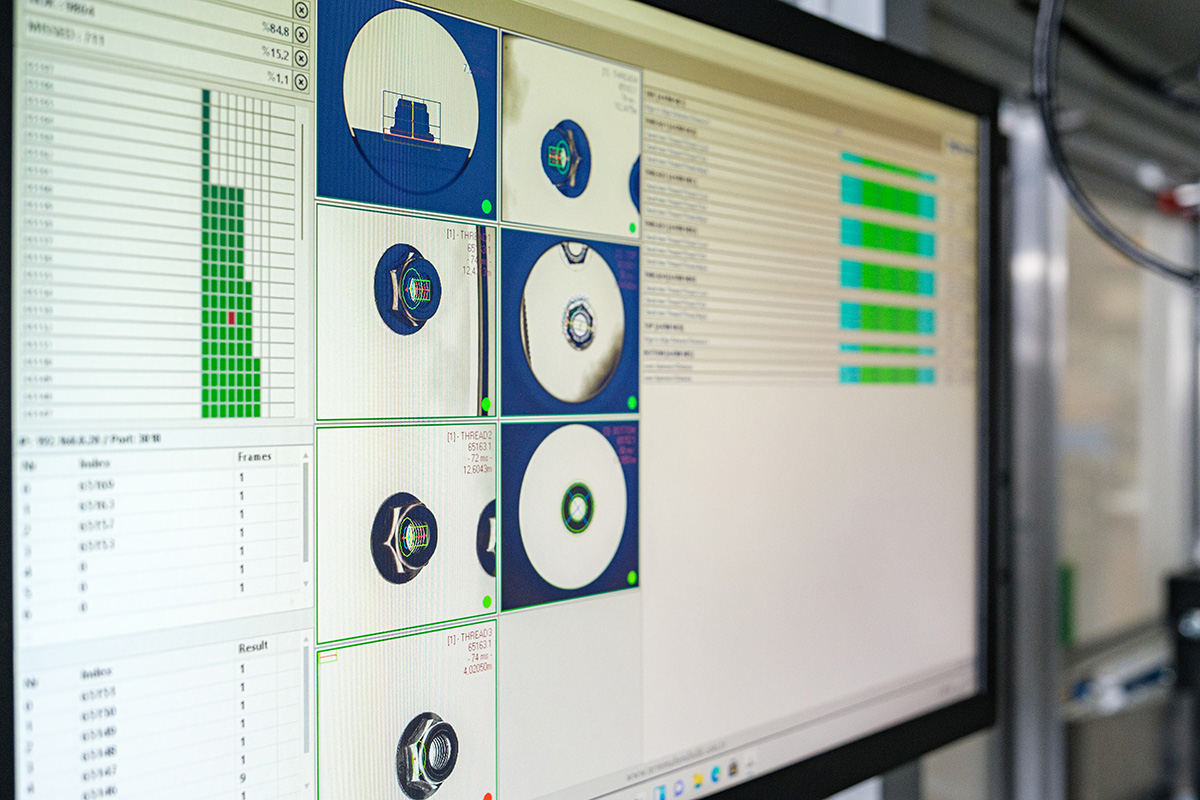
Machine vision is a technology that enables machines or computer systems to make automated decisions by perceiving and analyzing images. They are commonly used in industrial automation, quality control, object recognition, robotics, and safety systems.
How Does Machine Vision Work?
Machine vision systems consist of the following basic components:
1. Camera and Optical Systems
Industrial cameras and lenses capture images.
2. Lighting
Adequate lighting is provided for accurate and consistent imaging.
3. Image Processing Software
Images are analyzed using algorithms, artificial intelligence, and computer vision techniques.
4. Processor (Computer or Embedded Systems)
Processes images and activates decision-making mechanisms.
5. Output and Automation
With the obtained data, machines are guided or information is provided to the systems.
Areas of Application for Machine Vision
Quality Control
Defective product detection on production lines.
Robotic Guidance
Enabling robots to recognize and process objects.
Automatic Recognition
Barcode and QR code reading, vehicle recognition by license plate.
Measurement and Control
Dimensional measurements and alignment in precision manufacturing processes.