
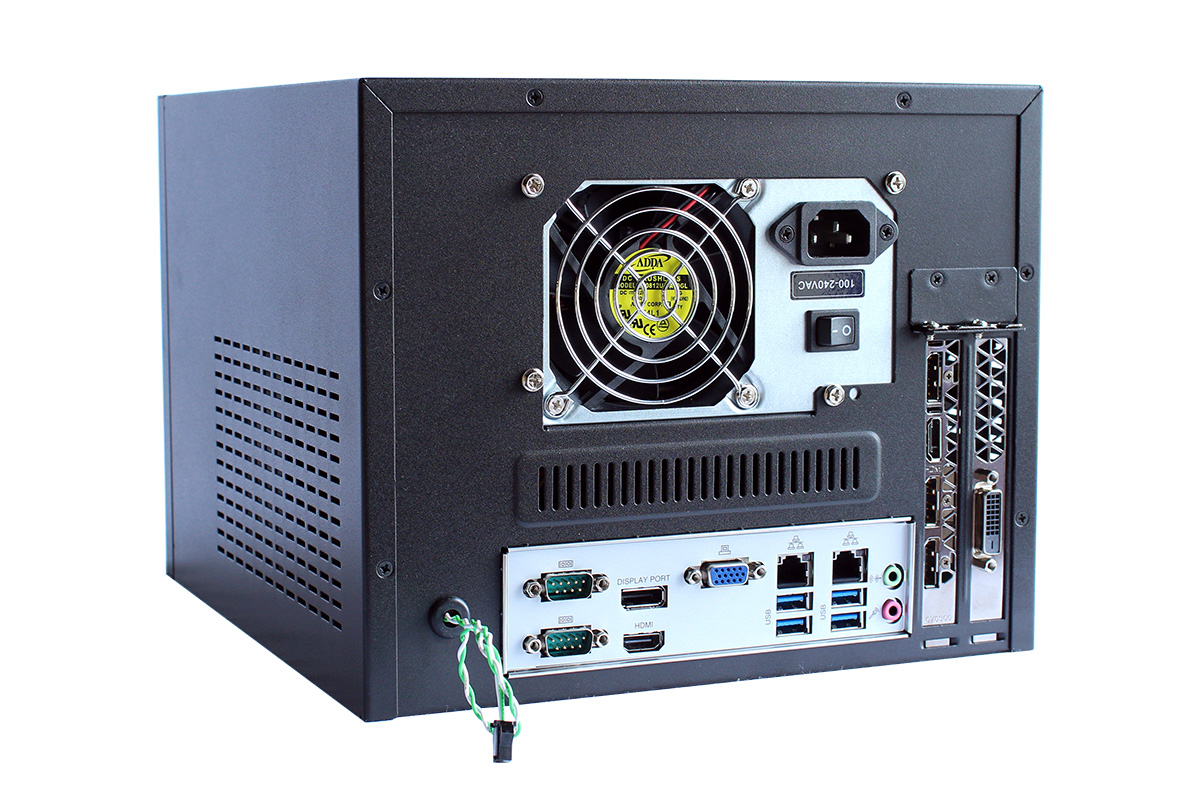
Durability and High Performance
Industrial computers are high-performance, long-lasting computing devices built to withstand challenging operating conditions. They have a wide range of applications, from factory automation to military applications, and stand out with their more robust construction and customizable features compared to standard consumer computers.
Advantages of Industrial Computers
- Robust and Durable Design
They exhibit high resistance to external factors such as dust, humidity, temperature changes, and vibration.
- Longevity and Reliability
Since they are manufactured with components complying with industrial standards, they can operate smoothly for a longer period of time.
- High Performance and Expandability
With powerful processors and a wide range of connectivity options, they can be adapted to various industrial applications.
- Energy Efficiency
They offer economical solutions with low power consumption in systems requiring continuous operation.
- Customizable Structure
Input/output ports, cooling systems, and communication protocols can be added as needed.
Areas of Application

- Automotive Manufacturing
Production line control, robotic systems, and data analysis.

- Food and Beverage Industry
Automation of quality control and production processes.

- Healthcare and Medical Technologies
Management of hospital equipment and imaging systems.

- Energy and Infrastructure
Renewable energy power plants and smart grid management.
Types of Industrial Computers
- Panel PCs
Compact and robust devices with integrated touch screens.
- Fanless Computers
Quiet systems containing no moving parts and requiring low maintenance.
- Rack Mount Computers
They are suitable for data centers and large-scale automation projects.
- Embedded Systems
Computers optimized for specific tasks, capable of fitting into small spaces.
Industrial computers, as one of the cornerstones of digital transformation, play a critical role in optimizing production processes, increasing data processing speed, and enhancing automation systems. With the developing technology, integration of smarter, faster, and more robust systems into industrial applications increases efficiency and competitiveness.
