
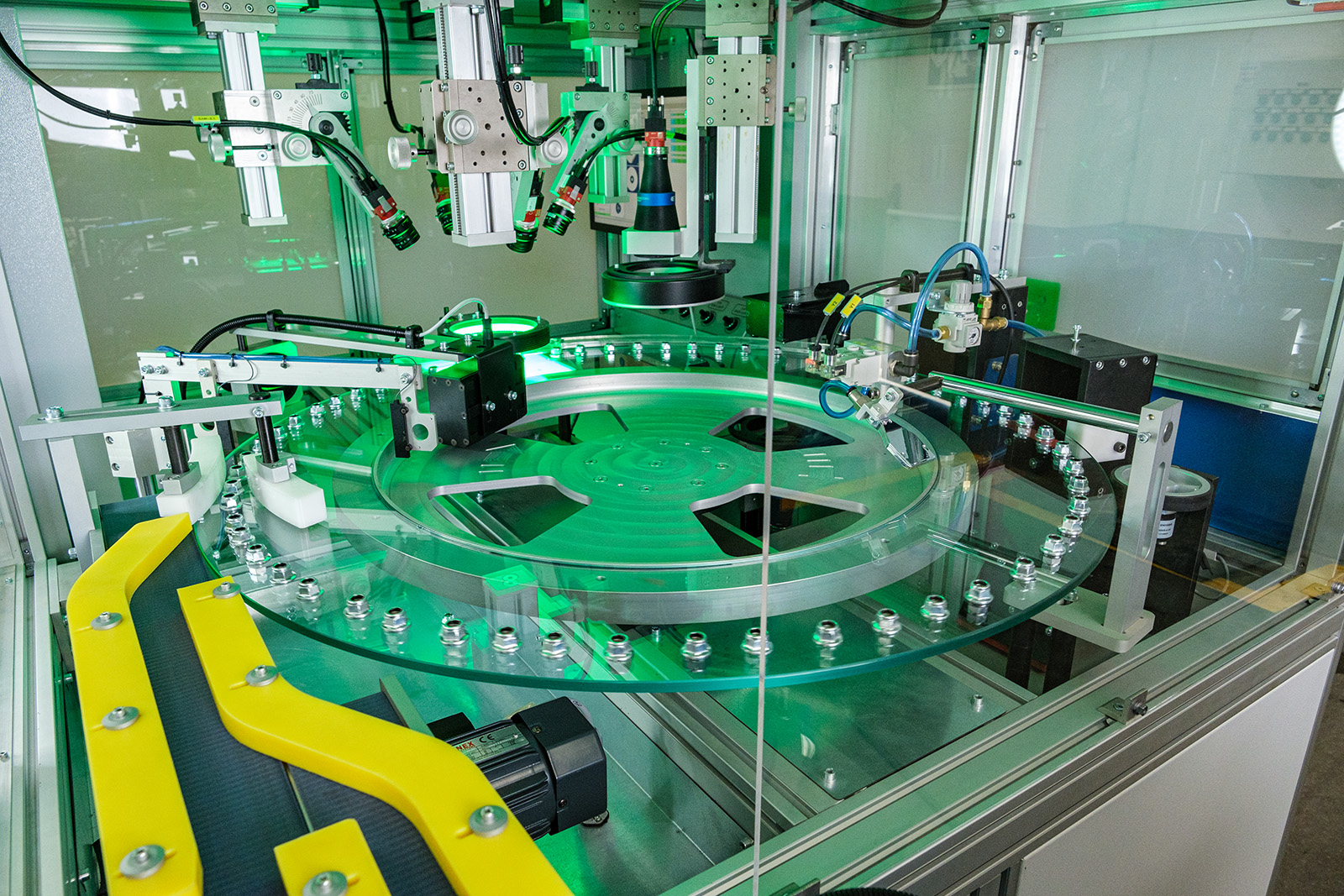
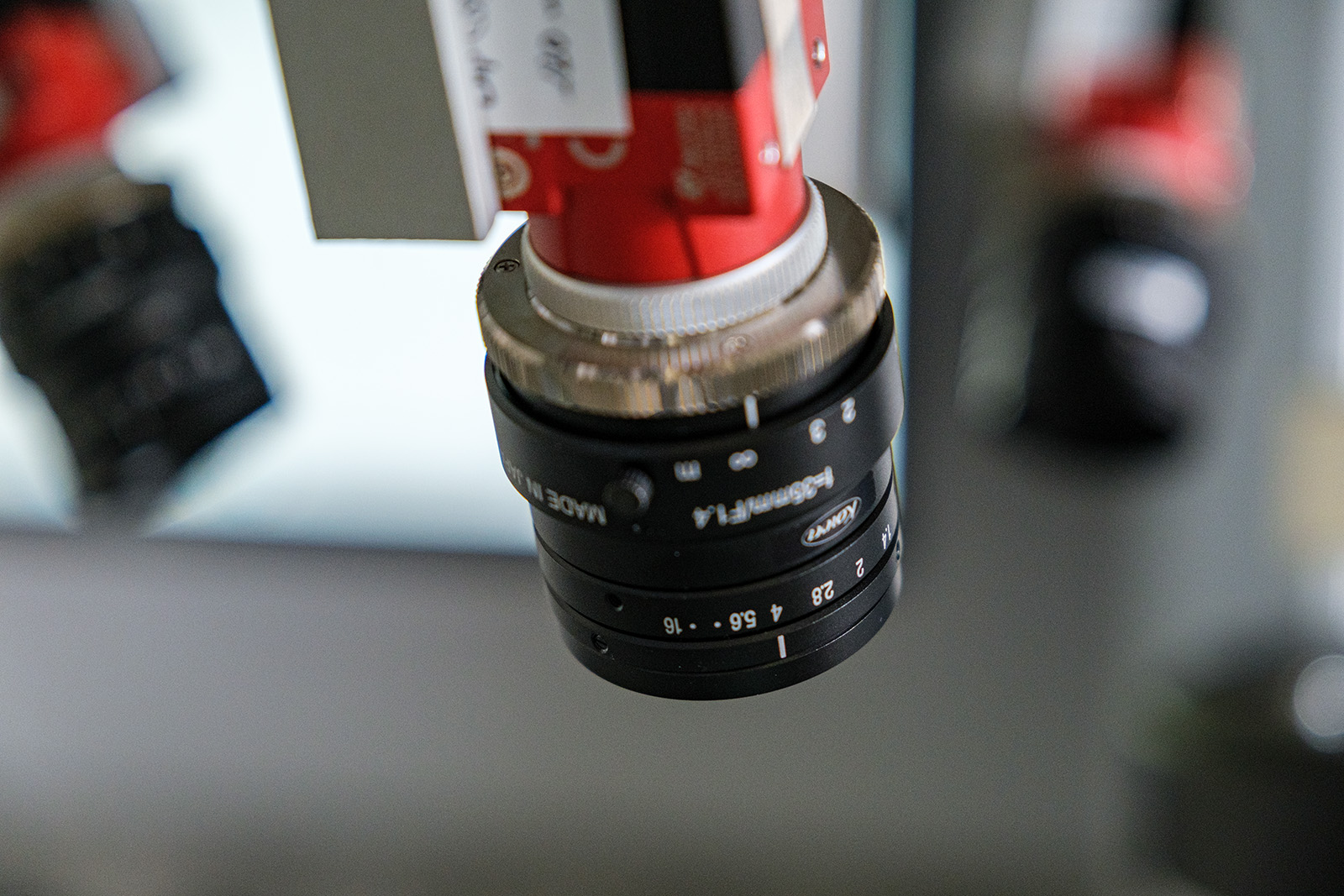
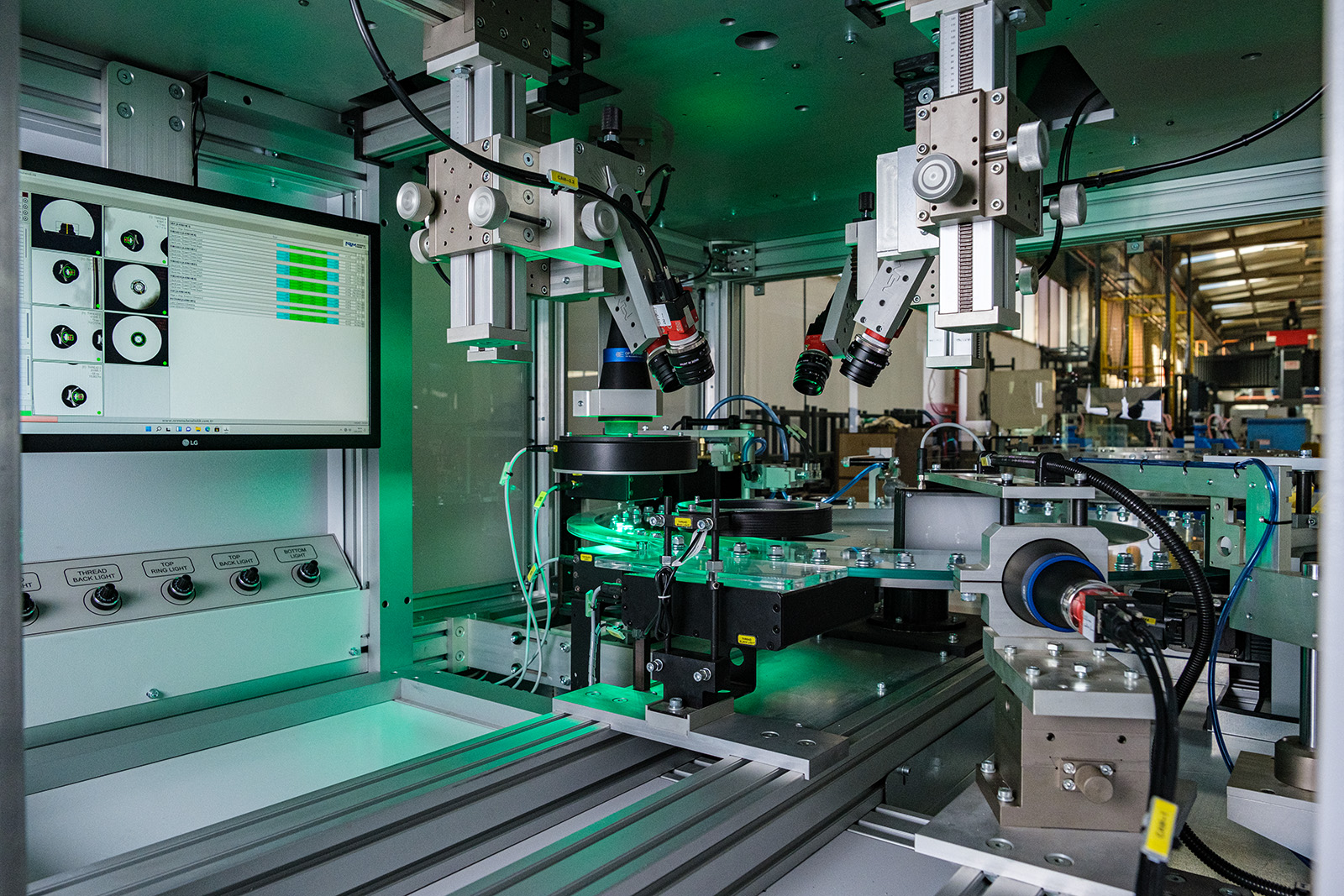
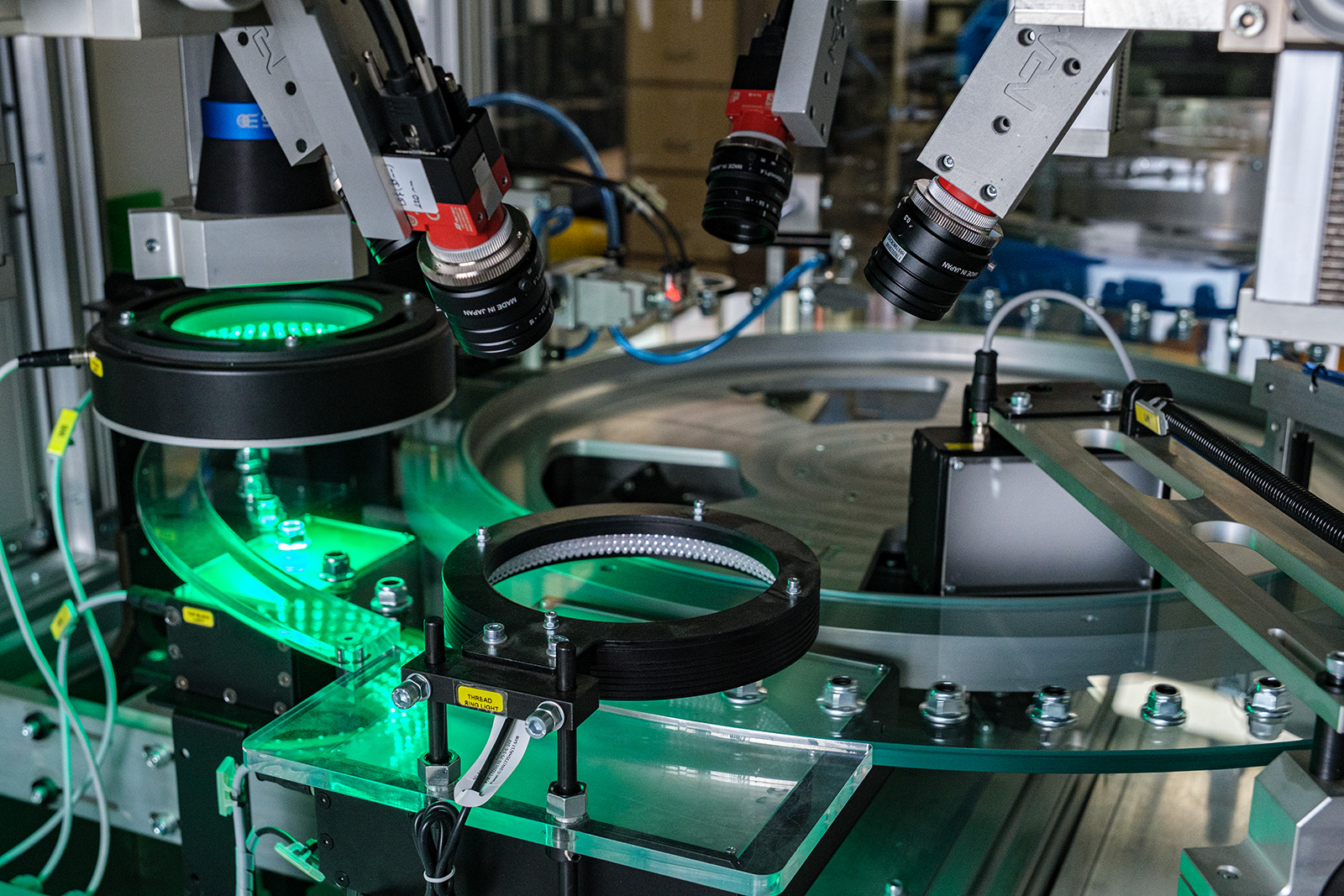
Industrial cameras are specialized imaging devices designed for monitoring production processes, ensuring quality control, and for use in automation systems. Their high resolution, accuracy, and durability make them suitable for a wide range of applications, from factories to laboratories.
Advantages of Industrial Cameras
- High Precision and Resolution
Industrial cameras can detect details at the micrometer level and, thanks to their high resolution, can identify even the smallest defects.
- Durability and Longevity
Resistant to dust, temperature fluctuations, and impacts, these cameras are manufactured for long-term use in harsh industrial environments.
- Fast Data Processing
Their real-time image processing capabilities allow for instantaneous checks on production lines.
- Flexible Integration
Supporting different interfaces and protocols, they can be easily integrated into existing automation systems.
Areas of Application

- Automotive Industry
Error detection, surface inspection and dimensional measurements during component production and assembly.

- Food and Beverage Industry
Label checking, product counting, and quality assessment on packaging lines.

- Pharmaceutical and Medical Industry
Sterilization control, pill size measurements, and packaging inspection.

- Electronics and Semiconductor Manufacturing
Circuit board inspection, component verification, and solder joint checks.

- Glass and Textile Industry
Detection of surface defects, color and pattern analysis.
Types of Industrial Cameras
- Area Scan Cameras
They are used to take a snapshot of a wide area.
- Line Scan Cameras
They are ideal for detailed inspection of conveyor belt systems.
- Thermal Cameras
They are used in quality control and safety applications by detecting temperature changes.
- 3D Cameras
They enable three-dimensional mapping of objects by providing depth information.
Industrial cameras provide businesses with cost advantages by increasing production efficiency and minimizing error rates. Integrated with AI-supported vision processing systems along with advancing technology, these cameras continue to be an important part of digital transformation in industry.
